
Waterlogged new-build garden: causes, checks and next steps
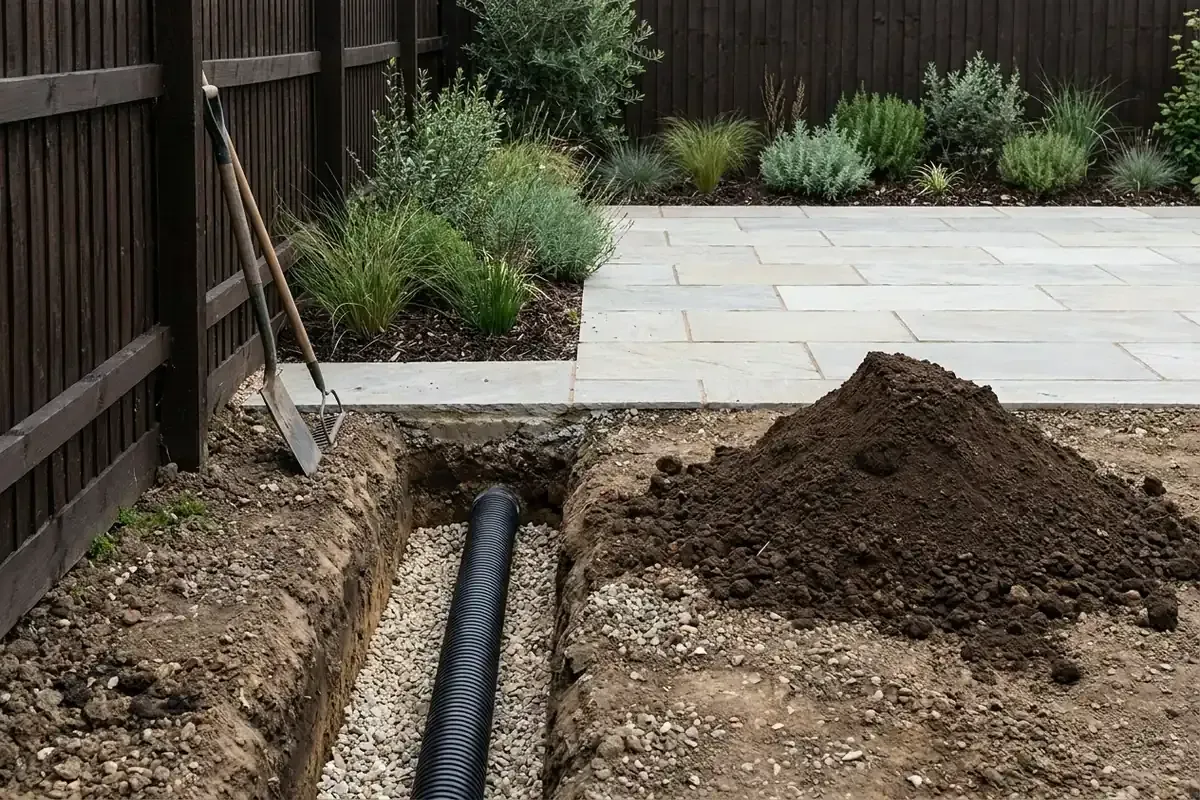
Assess the soil and the site before choosing a remedy. The RHS lists compacted soil, often from heavy machinery during building work, heavy clay, and poor soil preparation as the usual causes, and a wet lawn alone does not tell you which one you have. If you think it may be a warranty matter, talk to your developer or warranty provider before altering anything. Then record what you see, keep off the lawn while it is wet, and plan the garden once you understand the ground.
Does NHBC cover garden drainage?
It depends on your policy and on when the problem is reported. NHBC Buildmark runs in stages. For the first two years after legal completion, the builder is liable to put right defects you report to them, where a defect is a breach of NHBC requirements. In years three to ten, NHBC provides insurance against damage caused by defects in specific parts of the home described in the policy. Whether a waterlogged garden counts, and which stage you are in, comes down to your own policy documents and the date of completion, so find them first. If you are not the first owner, earlier claims may have used some of the cover. Not every new home has NHBC cover, so check who your warranty provider is. Find your policy documents and report the waterlogging to your developer or warranty provider before changing the garden, with your record attached.
Why a new lawn can struggle to drain
The turf the developer laid is only the top layer. The RHS guide to new-build gardens explains that new-build plots can have compacted subsoil and buried construction debris under the replaced topsoil, and recommends assessing the site before developing the garden. Heavy plant compresses the ground during the build, water drains through it slowly, and the lawn sits wet. Not every wet new-build lawn has the same cause, which is why the ground needs looking at before a fix is chosen.
What to record before asking anyone
Build a clear picture before you contact the developer, the warranty provider or a landscaper:
- Exactly where water collects, and the date each time you see it.
- Photographs from the same spots during and after rain.
- How many hours or days the area stays wet.
- Whether water is arriving from elsewhere: a neighbour's higher garden, an overflowing downpipe, a path draining towards the lawn.
- Any changes you have made to the lawn, paving or levels since you moved in.
This record explains what you have seen to whoever looks at it next. It is useful whichever route the fix takes.
What can I do now, and what needs a site assessment?
Some things are yours to do now. Record the problem, and keep off the lawn while it is waterlogged; the RHS notes that walking on it makes the compaction worse. For compacted ground, spiking or hollow-tine aeration lets water get down into the soil, and the RHS advice is to wait until the standing water has drained away before aerating. Soil improvement is a conversation for the site assessment.
Choosing between a drainage system, soil improvement and re-levelling is a site decision, because it depends on what is under the lawn and where the water can go. A drainage system only works with a suitable outlet for the water. That is what a site assessment is for, and it is where the record you have kept earns its keep.
Plan the garden after understanding the starting point
If you are thinking about a patio, a seating area or the whole garden, the condition of the ground belongs in that plan from the start. Understanding the ground gives the drainage work and the finished layout a shared starting point, so the patio, the lawn and the planting are designed with the water in mind rather than around it.
How Green-Builds approaches it
Green-Builds plans groundworks, drainage and landscaping as one job, so the fix and the finished garden are designed together. Mention the waterlogging when you first contact us and share what you have recorded. At the free site consultation we look at the space with you, talk through the drainage problem alongside how you want to use the garden, and look at access and the practical side. From there, you receive a written quotation and proposed programme before you approve any work, with one point of contact from start to finish. See how we approach new-build gardens.
For a new-build garden in Birmingham or the West Midlands, tell us where the water collects and what you would like the garden to be. Request a free site consultation. The initial conversation and site consultation are free. We respond within one working day.
