
When is the best time to landscape a garden?
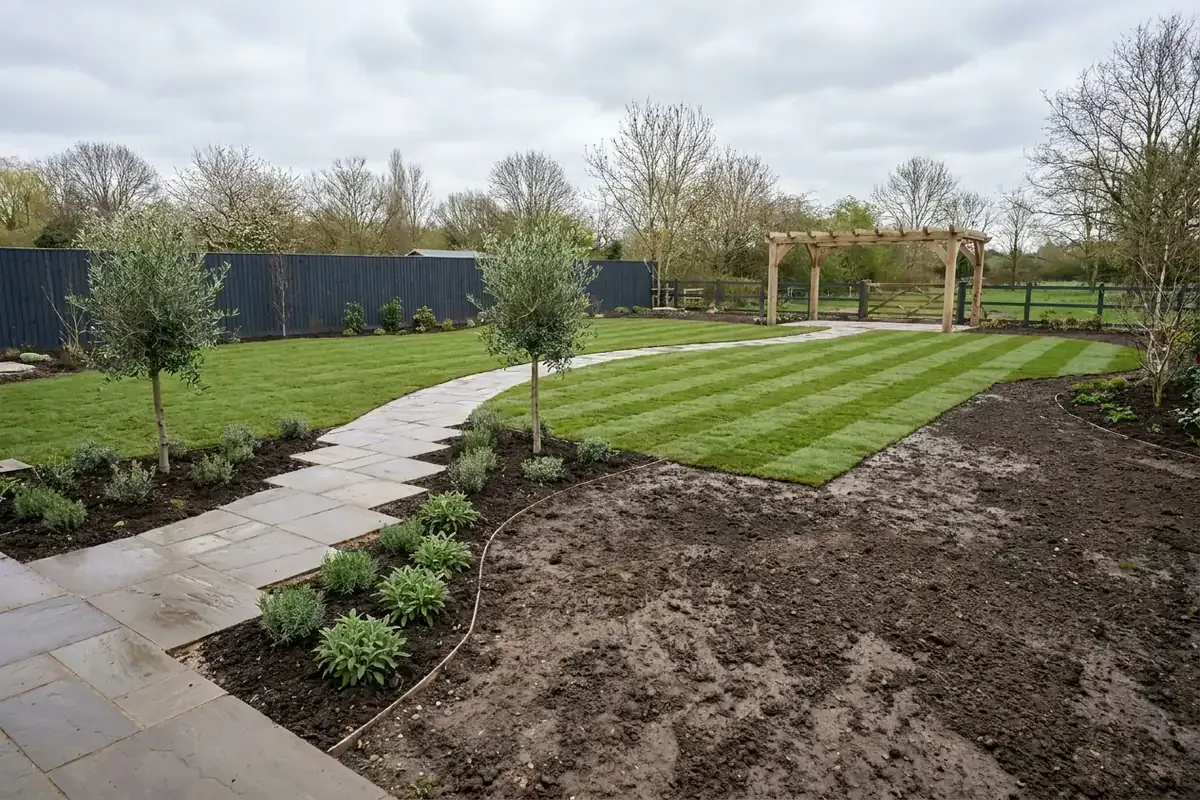
There is no single best month, because paving and construction, lawn laying and planting have different windows. The useful answer is to separate planning from building: if you want the garden for next summer, start the design and quotation in autumn or winter, so the build can go ahead when conditions suit each part of the work.
What time of year to redo a garden?
Patios, walls and structures can be built through most of the year when conditions allow. Planting and lawns follow the seasons, because soil temperature and moisture decide whether they establish. Knowing the different windows lets you sequence the project so the construction happens first and the lawn and planting go in when they will thrive.
Separate the design date from the build date
A finished space for the first warm days of summer starts with a conversation months earlier. The design, the specification and the quotation take time, and so does fitting the build into a programme. Use the autumn conversation to discuss the layout, the material choices and when you want to use the garden. Green-Builds provides the written quotation and proposed programme before you approve the work, so the planning and the building are not squeezed into the same few weeks.
The parts of the project
Each part of a garden has its own conditions:
- Trees and shrubs: the RHS recommends planting between October and April, avoiding frozen or waterlogged soil. Container-grown plants give more flexibility; bare-root plants go in while dormant.
- New turf: mid-autumn is the RHS's preferred time, with a window continuing into early spring while the soil is neither too wet nor frosty, according to the RHS lawns from turf guide. Preparation is part of the job.
- Paving and construction: groundworks can continue through winter, but Pavingexpert explains that frozen ground and very wet conditions can stop paving work, because freezing affects mortar while frozen ground and aggregates prevent accurate levels and proper compaction.
Is winter a useful time to start?
Yes, for the planning. The site visit, the layout and the choice of materials are different activities from laying paving or planting into frozen ground. Use the visit to discuss the levels and share any waterlogging you have recorded. Use the winter conversation to agree which work needs to happen first and what conditions could change the programme. Green-Builds provides a proposed programme with the written quotation before you approve the work, so the sequence is agreed rather than hoped for.
What if you want the garden for an event?
Mention the date at the first conversation. A fixed date changes how the project is programmed. If the whole design cannot be completed comfortably in time, the useful move is a first stage that makes the space work for the event, such as the main patio and the pergola, with the remaining landscaping phased in afterwards. Allow time for new lawn and planting to settle before the day.
What to ask at your consultation
Ask which parts of the work need to happen first and what weather or ground conditions could change the programme. Ask who is organising the materials and the trades, and whether permissions, materials or specialist trades are likely to affect timing. Ask when the garden will be ready to use, not just when the builders will leave site, because new lawn and planting need aftercare before they can take heavy use.
How Green-Builds approaches it
Tell us when you want to start enjoying the space, and we plan the groundwork, structure and planting to suit, from a new patio to a complete transformation. You receive a proposed programme alongside your written quotation before you approve the work, with one point of contact from start to finish.
Tell us when you want to use the garden, and where it is in Birmingham or the West Midlands. Request a free site consultation. The initial conversation and site consultation are free. We respond within one working day.
